Back
Back
Back
Back
Back
Back
Back
Back

Select your country and language preference

The page you are trying to navigate to is only avalible in the following regions, please select a country and language to proceed.

Back

Your largest customer doesn’t have to be called first

When bookings, deliveries and collections fill the day, your time easily goes to the customers who get in touch most, week after week. But the loudest customer isn't always the one who needs the call most.

projekt manager managing construction projects

The customers who don’t get in touch

When a customer needs help quickly, it is natural to prioritise them. But while the phone sets the agenda, things can change with other customers without you noticing. A regular customer starts hiring less, or stops ordering a certain type of equipment – and says nothing about it.

There may be a perfectly natural explanation. But you won’t know until someone asks. Otherwise you find out once the customer is already hiring from a competitor.

Three questions to start with

To choose which customers to prioritise, start with three questions:

  • Which customers do we spend the most time on today?
  • What does the customer hire from us today, and are there other needs we could help with?
  • Which projects does the customer have coming up, and how does the business fit what we offer?
"Don’t start with your biggest customer. Start with the one whose hire has dropped, and ask why."
– David White, Senior Business Development Manager

Weigh up three things

When choosing which customers to contact first, weigh up how the business is working today, what has changed and what needs lie ahead.

  1. How is the business with the customer working today? What do you earn once delivery, servicing and extra work are included?
  2. How big is the change? Has the customer stopped hiring a certain type of equipment, or are they hiring less of most things? And is it a one-off drop, or has it been going on for several months?
  3. What do you need to talk about now? Is the customer about to start a new project, and is there time to help with the set-up before the orders are placed?

Example: the customer who stopped hiring access platforms comes first

A regular customer still hires site cabins from you but has stopped hiring access platforms. Nobody in your team knows why. It could be one of two things: another contractor has taken over the access platforms, or the customer is hiring them from someone else. If it’s the first, you need to find out who orders now. If it’s the second, you need to understand why the customer chose a competitor.

At the same time, a larger customer has reduced its hire after finishing a build. There you know the reason, and the next contact is already planned.

So you call the customer who stopped hiring access platforms first. The change is unexplained, and the customer is about to start a new project and has not yet decided on the full set-up. If you call now, you can help with the set-up before the orders are placed. The large customer still matters, but there is nothing unclear to sort out right now.

Want to test the approach? Start with five to ten customers with similar projects or needs, and follow up after 30 days.


Want more tips?

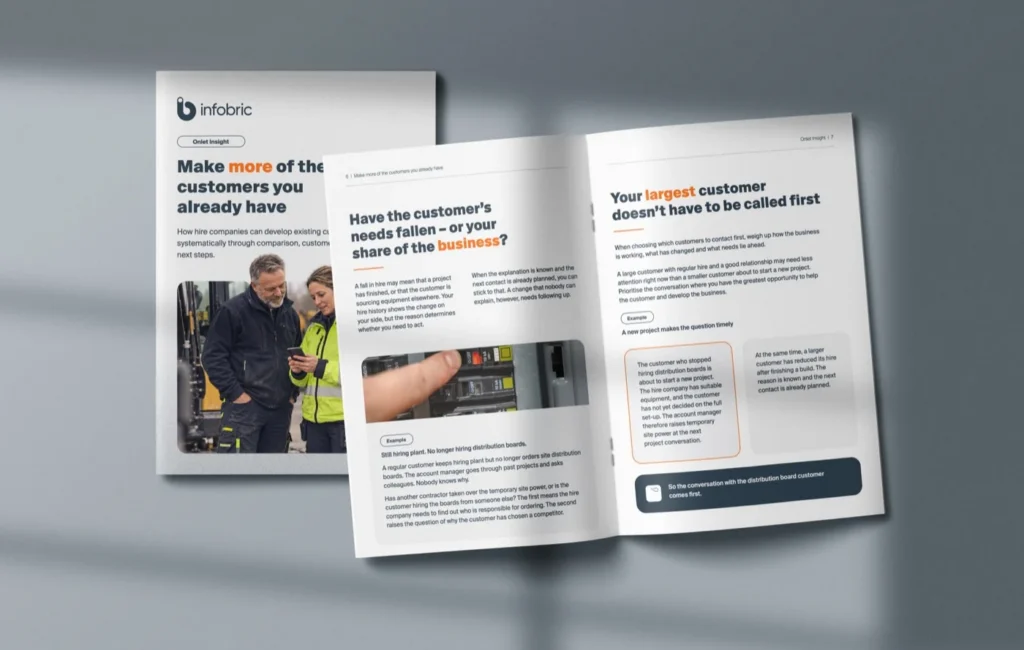
Our guide Make more of the customers you already have gives you three questions and a plan for testing the approach over 30 days.

Download the guide
Download the guide

Read more

Make more of the customers you already have

Make more of the customers you already have When urgent requests set the agenda, the same customers tend to get your time – and it’s easy to miss a regular customer...

Read more
Conversations that protect your hire business

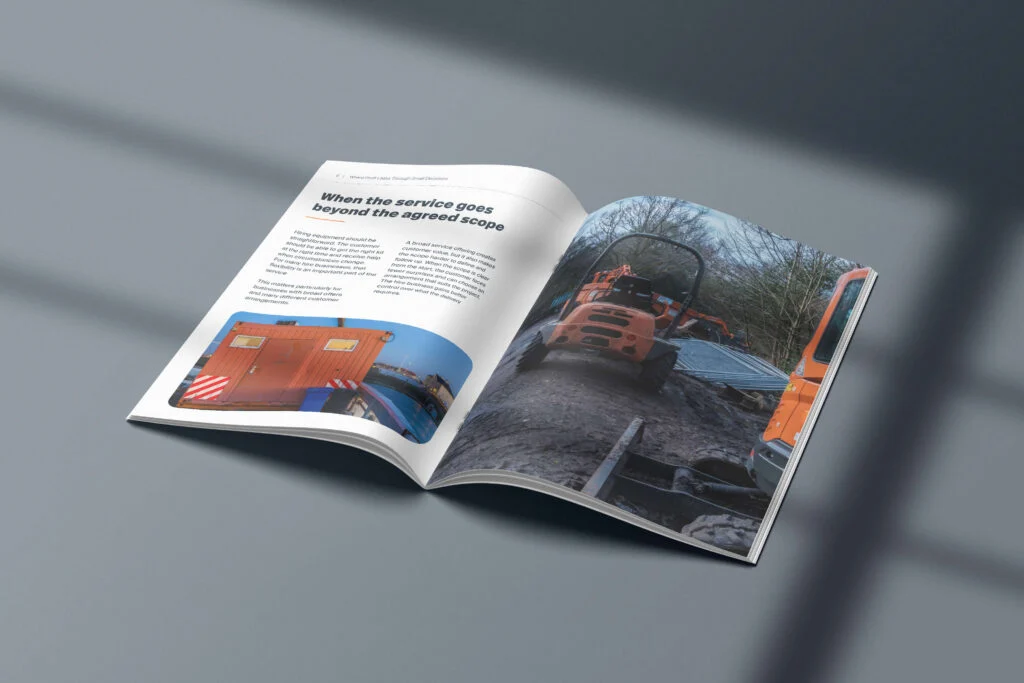
Conversations that protect your hire business Extra journeys, late changes and extras that do not appear in the order or invoice can leave a hire requiring more work than the price reflects....

Read more
A construction worker using the fatigue management app on his phone
They hire site cabins from you. Why not access platforms?

A regular customer doesn’t always know everything you can help with. Sometimes you only notice when you see a competitor’s equipment on site. The customer had forgotten you hire out access...

Read more